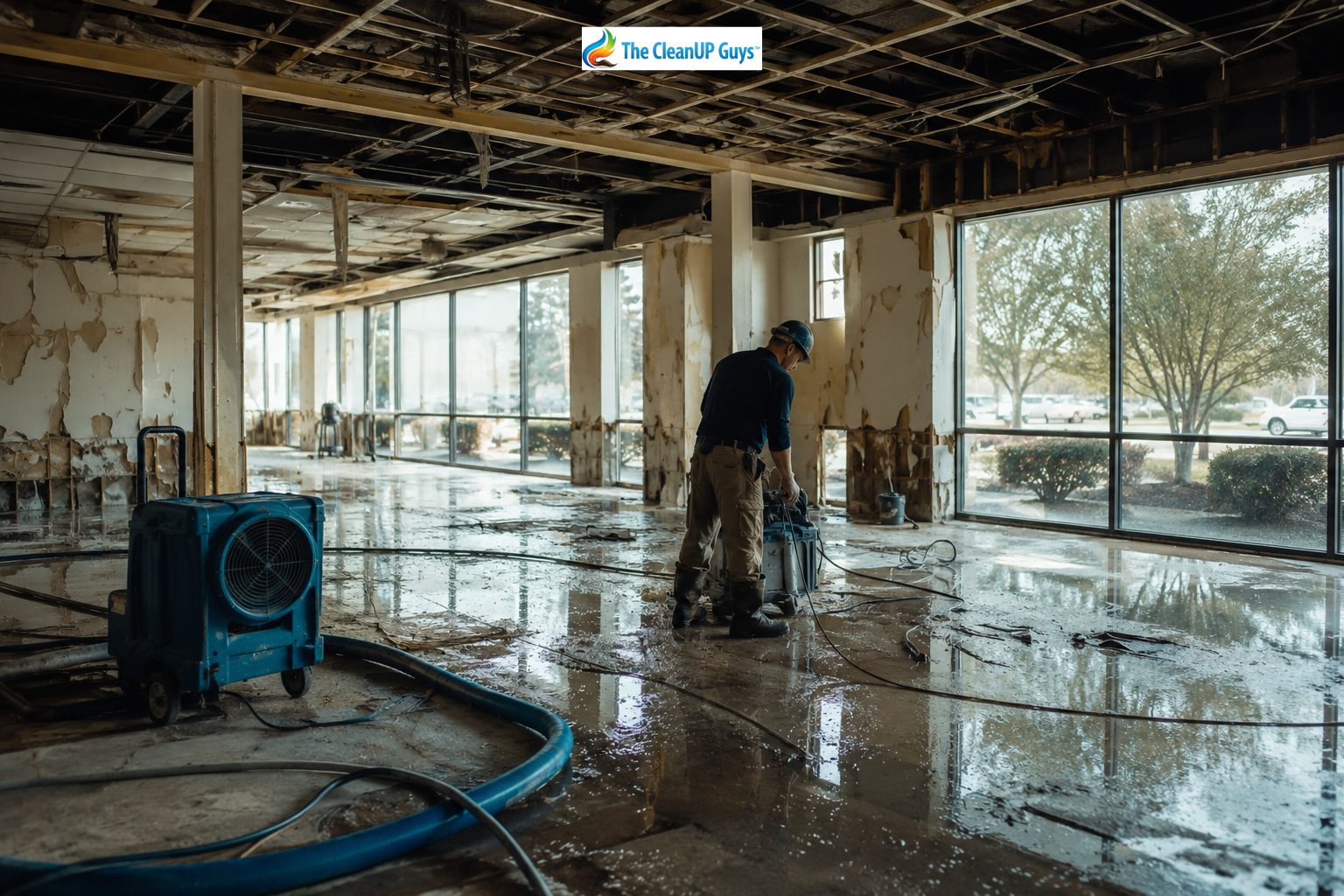
Finding water damage in your home can be overwhelming, but what you do in the first few minutes is crucial. Whether it's from a burst pipe, a leaky roof, a broken appliance, or storm damage, acting quickly can minimize structural damage, lower cleanup costs, and help prevent mold. If you need immediate assistance, a professional water damage restoration team can assess the situation and start mitigation before the damage worsens.
One common mistake is waiting too long to act or trying to handle everything without ensuring safety first. The goal isn't to fix everything immediately; it's to stop the source, keep everyone safe, document the damage, and start drying out the area as soon as possible. The U.S. Environmental Protection Agency notes that mold can start growing within 24 to 48 hours after water exposure, so quick action is key.
Step 1: Prioritize Safety Before Entering the Area
Check for Electrical and Structural Hazards
Before entering a flooded room, look for dangers like water near electrical outlets, sagging ceilings, warped floors, or broken glass. If there's any chance water has reached electrical systems, avoid the area until the power is safely turned off. Electrical shock is a serious risk after water exposure, so always prioritize caution.
Turn Off Power Safely
If you can reach the breaker box without stepping in water, shut off electricity to the affected area. If the breaker box is in a flooded basement or it's unsafe to access, don't attempt it yourself. Remember, safety is more important than speed, and a trained restoration company can help stabilize the situation once the immediate danger is managed.
For homes with significant flooding, especially in lower levels, it's wise to consider issues like sewage contamination or appliance backflow. In such cases, professional sewage cleanup might be necessary because contaminated water can pose health risks.
Step 2: Quickly Stop the Water Source
Find the Shutoff Valve
Once it's safe, locate and stop the water source immediately. For plumbing failures or leaks, this usually means turning off the main water supply. If it's a leaking appliance, you might be able to shut off a local valve instead. Acting fast here can significantly reduce the amount of water soaking into walls, floors, and insulation.
Recognize When Professional Help is Needed
While minor drips may be manageable, large leaks or flooding often indicate a deeper issue requiring professional attention. Chicago homeowners are familiar with freeze-related pipe breaks in winter and heavy-rain basement seepage in warmer months. If your property has widespread water intrusion, a coordinated flood cleanup can help remove water, dry the structure, and prepare the area for repairs.
Rapid response is essential because the first 24 to 48 hours are critical. According to the Institute of Inspection, Cleaning and Restoration Certification, immediate mitigation, moisture control, and proper drying procedures help limit additional damage.
Step 3: Document the Damage Before Cleaning
Take Photos and Videos
Before moving furniture, tearing out flooring, or discarding damaged items, document everything. Capture wide shots of the room and close-ups of damaged walls, ceilings, belongings, and visible water lines. This evidence can be very helpful during the insurance claim process and may also guide your contractor’s work.
Create a Basic Inventory of Affected Items
Note down damaged items, their location, and any visible serial numbers or brand names if possible. Include furniture, rugs, electronics, clothing, and stored household goods. A clear record helps reduce confusion later and can speed up insurance conversations when adjusters ask for proof of loss.
Homeowners often wonder if they should start throwing things away immediately. Usually, the answer is no until the damage has been documented. If moisture has reached porous materials or hidden building cavities, a professional basement cleaning or restoration assessment can determine what can be saved and what must be removed.
Step 4: Remove Standing Water and Start Drying
Use Safe Extraction Methods
If the water level is shallow and the area is safe, you might be able to remove some standing water with towels, mops, buckets, or a wet/dry vacuum. However, if there's a lot of water, it's crucial to use the right equipment and avoid spreading contamination. Never rely on household fans alone for large water losses; moisture often hides behind baseboards, under flooring, and inside drywall.
Set Up Ventilation and Dehumidification
Once visible water is removed, drying needs to begin immediately. Open windows if the weather is dry and safe, then use fans and dehumidifiers to speed up evaporation. This step is important because trapped moisture can lead to mold growth, odors, and long-term material deterioration. For homes with recurring moisture problems, especially in storage areas, professional mold removal may be needed if growth has already started.
Research shows that delayed drying raises costs. Homeowners value rapid response and often prefer same-day service and emergency callback support. This indicates a simple truth: when water damage occurs, people want quick action, not vague promises.
Step 5: Clean, Disinfect, and Decide What to Remove
Handle Contaminated Materials Carefully
Not every item can be saved. Carpets, insulation, drywall, and upholstered materials may need removal if they were soaked too long or exposed to contaminated water. Surfaces that can be cleaned should be disinfected thoroughly after drying begins, especially in kitchens, bathrooms, and basements where bacteria can spread quickly.
Understand Clean Water vs. Risky Contamination
Water from a supply line isn't the same as water from a sewer backup, storm overflow, or long-standing basement leak. If the source is questionable, don't treat it as a simple spill. In hazardous situations, sanitizing the area and restoring safe indoor conditions should be handled by professionals with the right equipment and protective measures. This is especially true when odors, sludge, or visible contamination are involved.
Professional restoration teams often combine deep cleaning, disinfection, drying, and odor control to reduce the chance of hidden problems later. If the event affects an apartment, office, or shared property, commercial restoration support may also be necessary to reduce downtime and keep occupants safe.
Step 6: Call Professionals Early to Limit Damage
Why Expert Help Matters
Many homeowners think they should wait to "see how bad it is" before calling for help, but this delay can increase the final cost. Certified technicians use moisture meters, thermal imaging, air movers, and dehumidifiers to find hidden dampness and prevent further damage. They can also determine when flooring, drywall, cabinetry, or insulation needs removal to avoid future mold and structural issues.
What a Professional Response Includes
A proper restoration plan usually includes emergency extraction, drying, sanitizing, deodorization, and a clear repair roadmap. In complicated cases, it may also involve insurance documentation and coordination with plumbers, contractors, or adjusters. For Chicago homeowners, this is especially useful when storms, frozen pipes, or basement seepage create multiple types of damage.
The CleanUP Guys have seen how quickly a small leak can turn into a bigger recovery project. In one residential case, a burst pipe in a Chicago home was quickly addressed with shutoff, photo documentation, and immediate drying, which helped prevent mold and limited demolition. In a commercial case, fast water removal and phased drying allowed a local business to reopen within days instead of weeks.
Preventing Mold and Long-Term Damage
Act Within the First 24 to 48 Hours
The best time to prevent mold growth is within the first two days after water exposure. If that window is missed, porous materials can stay damp even when surfaces look dry. That's why prompt drying and inspection are crucial, especially in humid weather or poorly ventilated spaces.
Be Aware of Hidden Warning Signs
Musty odors, bubbling paint, discoloration, and warped trim can all indicate moisture has spread beyond what you can see. Don't ignore these warning signs, as hidden moisture can weaken framing and ruin finishes over time. If you notice any of these issues after cleanup, a follow-up evaluation is worth the effort.
For more homeowner guidance on mold prevention and post-water-damage cleanup, the Centers for Disease Control and Prevention offers helpful public health information. This is especially important in homes where children, seniors, or anyone with respiratory sensitivities may be exposed.
When to Call a Restoration Company Immediately
Situations Requiring Immediate Professional Response
Call for help right away if the water is rising, the leak source is unknown, the damage covers multiple rooms, or the water may be contaminated. You should also call quickly if drywall, flooring, cabinets, or insulation have been affected for several hours. If the damage is in a basement, crawlspace, or business property, the risk of hidden moisture is even higher.
Questions to Ask When You Call
Ask about response time, drying equipment, sanitation procedures, and how documentation will be handled for insurance. Clear communication matters because homeowners need to know what happens next and how long the process may take. The restoration industry emphasizes customer communication, same-day service, and clear scopes of work as core service expectations.
If you're dealing with water damage in Chicago, The CleanUP Guys can help you move from emergency response to full recovery with confidence. Learn more about our restoration process and get support before the problem gets worse.
Final Thoughts: Quick Action and Safety First
The first steps after discovering water damage are simple but crucial: stay safe, stop the source, document the loss, start removing water, and bring in professionals if the situation is beyond a minor cleanup. Quick action can save flooring, protect your home's structure, and reduce the likelihood of mold or contamination. Even better, it can shorten the disruption to your household and help you recover with less stress.
If you're facing water damage now, don't wait for it to spread. Contact The CleanUP Guys for fast, reliable help and take the first step toward restoring your property, your safety, and your peace of mind.